



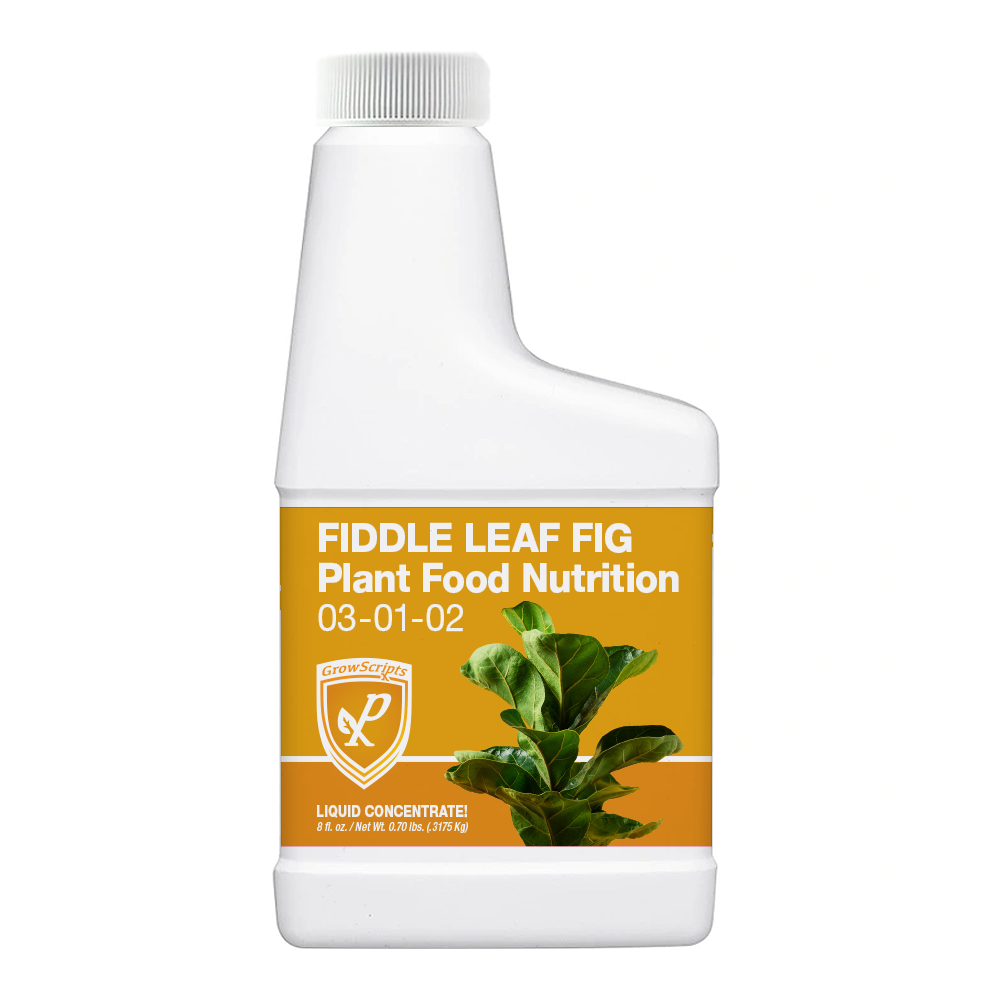
3-1-2 Fiddle Leaf Fig Fertilizer - 8-OZ
$12.99
Shipping calculated at checkout.
Fiddle leaf figs are grown for their big, bold, violin-shaped leaves, and putting out that much leaf takes nitrogen. This Fiddle Leaf Fig plant food is a 3-1-2 liquid concentrate built for exactly that, a nitrogen-forward feed with extra nitrogen for leafy growth, plus the micronutrients that keep the foliage deep green and glossy. You mix it into your watering and pour it in, so feeding your fiddle leaf is one easy step, and the higher-nitrogen ratio matches what this hungry, fast-leafing plant actually wants.
Made for fiddle leaf figs: a 3-1-2 liquid plant food formulated for their specific needs.
Nitrogen-forward 3-1-2: extra nitrogen for the big, bold, leafy growth fiddle leaf figs are known for, plus micronutrients for glossy green color.
Liquid concentrate: dilute it into your watering and apply to the soil, no guesswork.
Supports strong roots and vibrant foliage.
Easy monthly feeding, made for indoor, container fiddle leaf figs.

3-1-2 Fiddle Leaf Fig Fertilizer - 8-OZ
$12.99