

Skip to product information
Sale

1-1-1 Monstera Plant Fertilizer - 8-OZ

$10.99
$9.99
 per 
Shipping calculated at checkout.

Monstera are easy to love and easy to underfeed. In a pot, a Monstera lives on whatever nutrition its soil holds, and once that runs down, the big, split leaves it is known for come in smaller, paler, and slower. This Monstera plant food is a gentle 1-1-1 liquid concentrate made for exactly that, an even, balanced feed you mix into your watering, so your Monstera deliciosa or adansonii gets steady nutrition for lush, deep-green, fenestrated leaves, without the risk of burning a houseplant with something too strong.

Key features

Made for Monstera: a gentle liquid plant food formulated for Monstera deliciosa, adansonii, and other split-leaf philodendrons.
Balanced 1-1-1 nutrition: even nitrogen, phosphorus, and potassium, the mild, balanced feed foliage houseplants prefer, plus micronutrients.
Liquid concentrate: mix it into your watering, no granules and no guesswork.
Supports big, fenestrated leaves: steady nutrition for the lush growth and leaf splits Monstera are known for.
Gentle for indoor use: diluted and fed monthly, easy on a houseplant.
Ingredients

  • 1-1-1 liquid concentrate: equal parts nitrogen, phosphorus, and potassium for balanced foliage growth.
  • Micronutrients: iron, manganese, zinc, copper, and molybdenum for deep green color and healthy leaves.

How to use

  1. Mix: add a quarter capful (2.5 mL, about half a teaspoon) to 16 oz of water, or one capful (5 mL, about a teaspoon) to 32 oz of water.
  2. Apply: pour it in as a soil drench as you water your Monstera into the soil.
  3. Schedule: after the first feeding, feed monthly to promote and maintain healthy growth.
  4. If leaves yellow: feed weekly until the color improves, then return to monthly feeding.

Why?

Monstera are foliage plants, so they want steady, even nutrition rather than a heavy bloom feed. A gentle, balanced 1-1-1 liquid gives them exactly that, supporting big, deep-green leaves and the fenestration Monstera are prized for, while the mild dilution and liquid form make it hard to overdo on an indoor plant. Mixed into your normal watering, it turns feeding into one easy step.

Makes how much?

An 8 fl oz concentrate makes many feedings, diluted at a quarter capful per 16 oz or one capful per 32 oz of water. Fed monthly, it lasts a Monstera a long time.

View full details
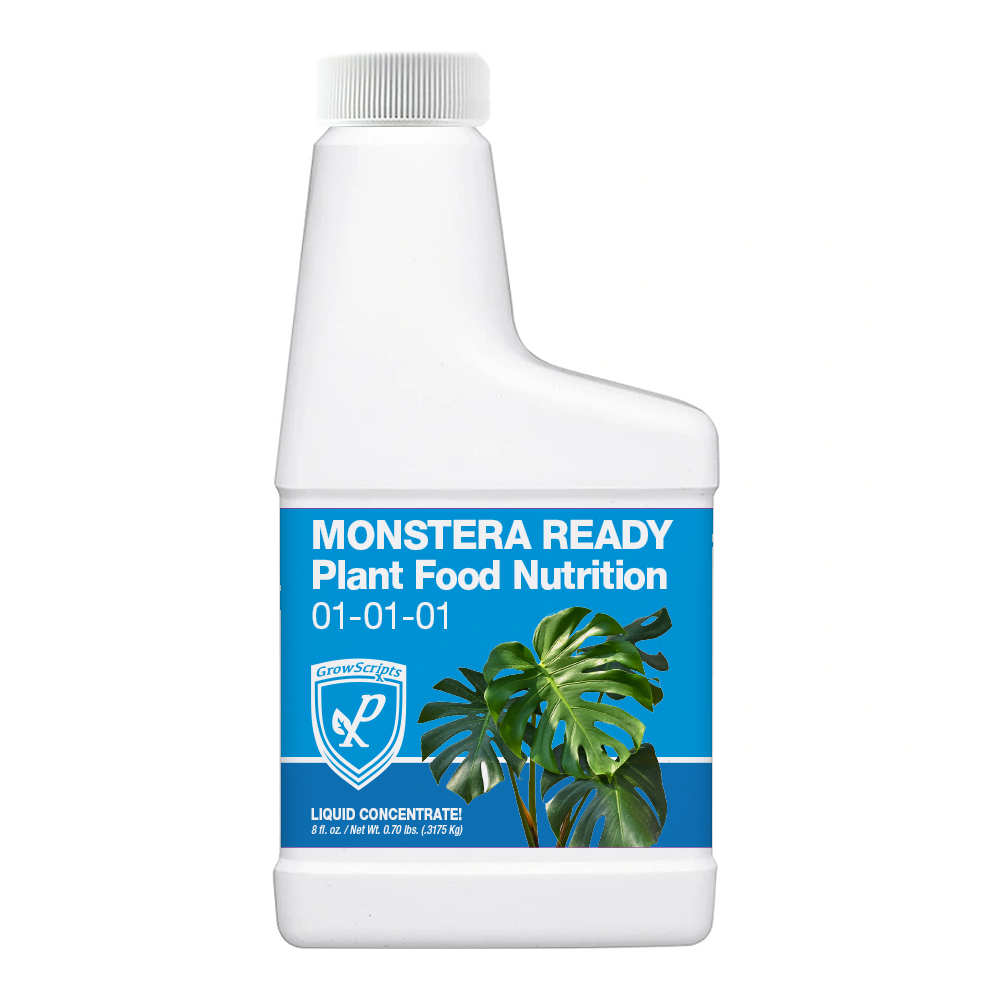
Bottle of Monstera Ready Plant Food Nutrition on a white background

1-1-1 Monstera Plant Fertilizer - 8-OZ

$10.99
$9.99
 per 

Frequently Asked Questions

What is the best fertilizer for Monstera plants?

Monstera do best on a gentle, balanced feed rather than a strong one. This 1-1-1 liquid plant food provides even nitrogen, phosphorus, and potassium plus micronutrients, diluted into your watering, which supports lush, deep-green, fenestrated leaves without the risk of burning an indoor plant.

How often should I fertilize my Monstera?

Feed monthly during regular watering to maintain healthy growth. If you notice yellowing leaves, feed weekly until the color improves, then return to a monthly schedule.

Can I use this fertilizer on Monstera deliciosa and Monstera adansonii?

Yes. It suits Monstera deliciosa, adansonii, and other split-leaf Monstera and philodendrons, indoors or in bright shade outdoors.

Will this fertilizer help my Monstera grow bigger leaves?

Steady, balanced nutrition supports larger, healthier leaves, and it is one factor in the fenestration Monstera are known for. Bright indirect light and the plant's maturity drive leaf size and splitting too, so feeding works best alongside good light.

Is this fertilizer safe for indoor Monstera plants?

Yes. It is a gentle, diluted liquid designed for indoor use, applied as a soil drench during watering.

Why are my Monstera leaves turning yellow?

Yellowing most often comes from overwatering, and sometimes from a plant that is underfed or short on light. Check that the soil is not staying soggy first, then, if the plant is otherwise healthy, a weekly feeding until color returns can help, followed by monthly feeding.

All about Monstera care and feeding

Feeding a Monstera

Monstera are grown for their foliage, so they want a mild, even feed rather than a heavy, bloom-focused one, which is why a balanced 1-1-1 liquid suits them. In a pot, the soil's nutrition runs down over time and with every watering, so a monthly feed keeps the plant putting out new, deep-green leaves. Because the feed is gentle and diluted, it is hard to overdo, but the plant still benefits from a rest in winter when its growth naturally slows.

Yellow leaves, brown tips, and brown spots

Monstera tell you a lot through their leaves, and the causes are usually about water, not just food. Overall yellowing most often means overwatering, so let the soil dry a bit and make sure the pot drains. Brown, crispy leaf tips usually point to dry air or inconsistent watering, so keep the soil evenly moist, not soggy, and raise humidity if your home is dry. Brown spots, especially with yellowing around them, are commonly a sign of overwatering, so ease off, improve airflow, and let the plant recover. Feeding supports a healthy plant, but fixing the watering is what clears most of these up.

Aerial roots are normal

New Monstera growers are often surprised by the thick roots that grow out from the stem. These aerial roots are completely normal, they help the plant climb and gather moisture, and you can either tuck them back into the soil or a moss pole, or simply leave them. They are a sign of a healthy, maturing plant, not a problem.

Why Monstera leaves split, and how to encourage it

The famous holes and splits, called fenestration, come mainly with maturity and bright light, not from feeding alone. Young Monstera and those in low light produce solid, unsplit leaves, and as the plant matures in good light it begins to fenestrate. Steady nutrition and a support like a moss pole help the plant put out those larger, split leaves, but light and age lead the way.

Pro tips for a thriving Monstera

Give it bright, indirect light, which drives both leaf size and splitting.

Water when the top inch or two of soil is dry, and never let it sit in water.

Feed monthly through the growing season, and ease off in winter.

Give a climbing Monstera a moss pole to encourage bigger, more fenestrated leaves.

Related products