Skip to product information
Sale

Container Tropical Fruit Fertilizer Kit for Banana, Mango & Papaya

$23.99
$19.99
 per 
Shipping calculated at checkout.

Bananas, mangoes, papayas, and dragon fruit bring a taste of the tropics to a patio or a sunny window, but grown in a pot they are hungry plants living on a small amount of soil. This container tropical fruit fertilizer kit is built for exactly that. It works as a banana fertilizer, a mango tree fertilizer, and a papaya fertilizer in one system, giving banana, mango, papaya, star fruit, lychee, dragon fruit, and other container tropicals complete nutrition through one simple, pre-measured system, so they grow lush and fruit well without the guesswork and without the giant bags.


Shop Your Favorite Retailer

Amazon Fast Growing Trees Yarden

Key features

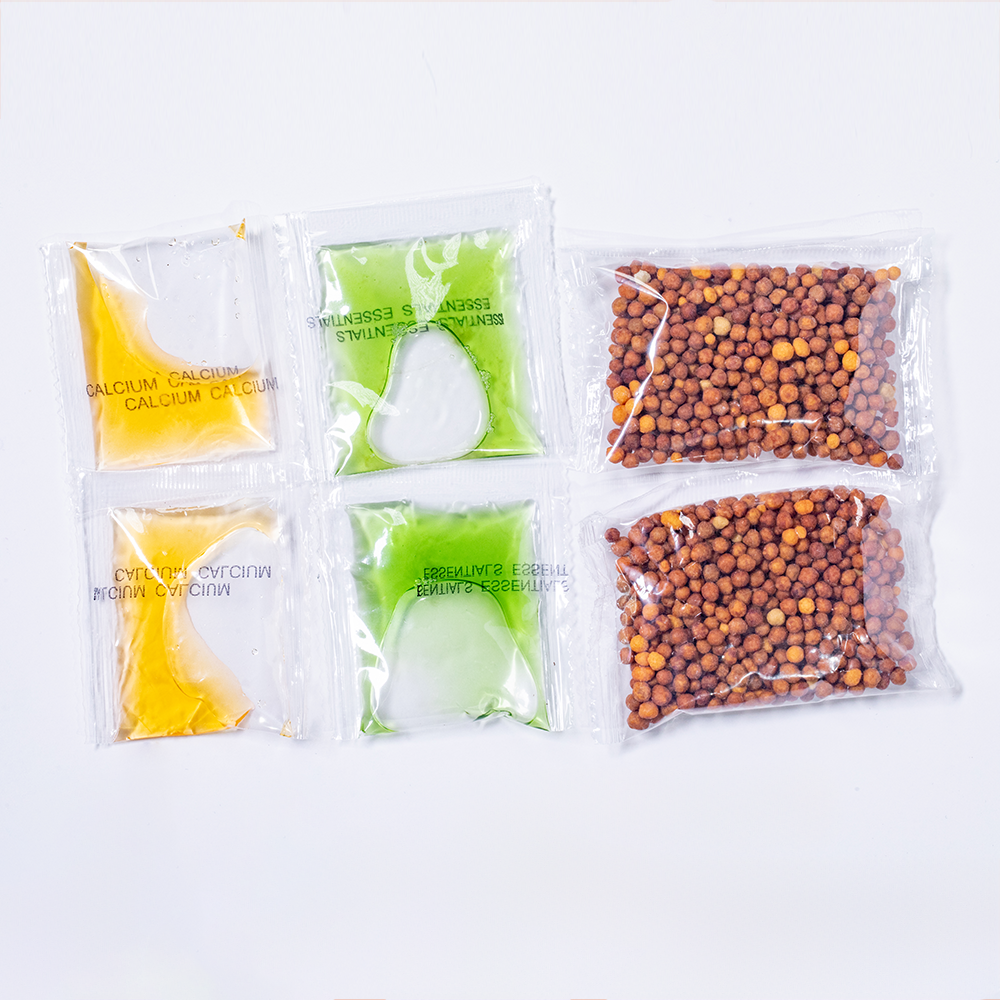
Controlled-release NPK 18-6-12: steady nutrients for months of healthy growth.
Micronutrient plant vitamins: iron, manganese, zinc, copper, and molybdenum for vibrant, lush foliage.
Calcium, magnesium, and boron concentrate: improves fruit quality and strengthens the plant.
Tailored for container and patio tropicals in a 3-gallon pot or smaller.
Compact, pre-measured portions, with no heavy bags to store.

Ingredients

  • Controlled-release fertilizer (18-6-12): poly-coated NPK for sustained growth.
  • Trace elements: iron, manganese, zinc, copper, and molybdenum for lush, green foliage.
  • Calcium nutrient concentrate: calcium, magnesium, and boron for better fruit and stronger tissue.

How to use

Fertilize the soil: spread the controlled-release fertilizer evenly over the soil at the base of the plant, not touching the stem. Do not mix it with water. Reapply on the included schedule.

Feed the leaves: spray the trace element solution on the leaves until run-off, or apply as a soil drench, every 4 to 6 weeks during active growth and any time to correct yellowing.

Support fruit: spray the calcium solution on the leaves, or apply as a soil drench, before and at bloom and as fruit sets.

Why?

This kit is made for growers who want tropical fruit without the challenge of managing large-scale fertilizers. It is compact, effective, and tailored for container-grown tropicals, giving your plants complete nutrition wherever you keep them, on a patio, a balcony, or indoors by a bright window.

Makes how much?

Feeds one container tropical fruit plant in a 3-gallon pot or smaller for a full season. Reapply as directed. Growing a big potted banana, an in-ground tropical, or several plants at once? The Large & In-Ground Tropical Fruit Kit covers a 30-gallon plant, two 15-gallon plants, or three 10-gallon plants.

View full details
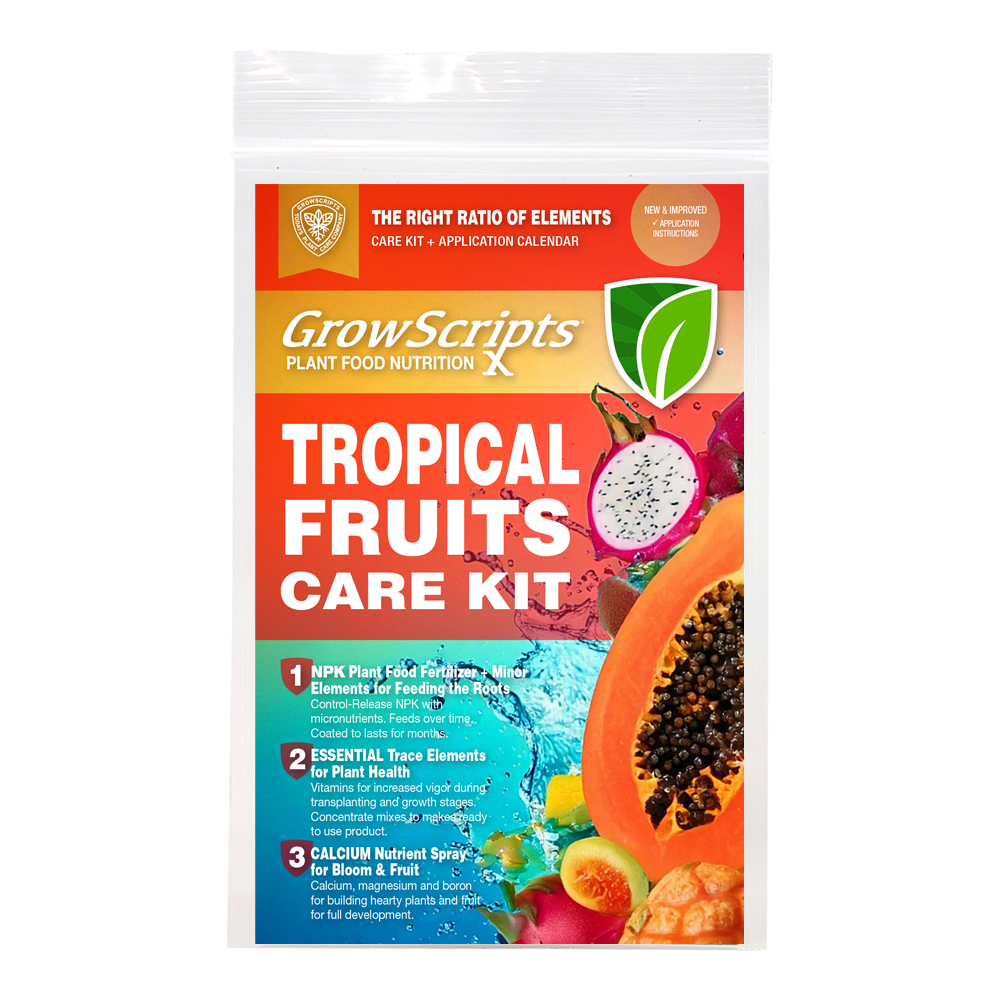
GrowScripts Tropical Fruits Care Kit packaging on a white background

Container Tropical Fruit Fertilizer Kit for Banana, Mango & Papaya

$23.99
$19.99
 per 

Frequently Asked Questions

Which tropical fruits can I use this on?

Container banana, mango, papaya, dragon fruit, star fruit, lychee, guava, passionfruit, and other potted tropicals. It is sized and formulated for tropicals in a 3-gallon pot or smaller, on a patio, balcony, or indoors.

How often should I feed my potted tropical?

The controlled-release granule feeds for months, so it goes down only a few times a season, while the trace and calcium sprays are applied every four to six weeks during active growth per the included schedule. That keeps nutrition steady without weekly feeding.

Can I use this as a banana, mango, or papaya fertilizer?

Yes. It works as a banana fertilizer, mango tree fertilizer, and papaya fertilizer in one kit, since these tropicals share the same demand for steady nitrogen, potassium, and the micronutrients that leach fastest from containers. Bananas in particular are heavy potassium feeders, which the controlled-release granule supports through the season. For a single plant in a 3-gallon pot or under, this kit covers it. If yours is in a large container, in the ground, or you are feeding several, the Large & In-Ground Tropical Fruit Kit is sized for that heavier demand.

Can I use this on indoor tropicals?

Yes. It suits patio, balcony, and indoor tropicals, including plants you bring inside to overwinter, applied on the same simple schedule.

Why are my tropical plant's leaves yellowing?

In containers, yellowing usually comes from nutrients leaching out with watering, most often nitrogen, magnesium, or iron. This kit provides complete nutrition plus the trace elements that address those deficiencies, which helps restore green foliage as the plant recovers.

How is this different from the large kit?

This kit is measured for one tropical in a 3-gallon pot or under. If you are feeding a large container plant, an in-ground tropical, or several at once, the Large & In-Ground Tropical Fruit Kit is sized for that, covering a 30-gallon plant, two 15s, or three 10s.

All about feeding container tropical fruit

Why container tropicals need their own approach

Tropical fruit plants are fast, vigorous growers with big leaves and heavy fruit, which makes them hungry even in a pot. A container tropical lives on the nutrients in that small volume of soil, and every watering flushes some of them out through the drainage holes, so the plant runs its soil down faster than a slower plant would. That combination, a heavy feeder in a limited root space, is why steady controlled-release nutrition suits potted tropicals better than occasional heavy doses that the plant cannot store.

Reading a hungry tropical plant

Tropicals show stress in their leaves first. Overall pale or yellow-green foliage usually means nitrogen is running low, while yellowing between the veins on newer leaves points to the micronutrients, especially iron and manganese, that leach quickly from containers. Slow new growth, small leaves, and poor fruiting follow if the shortage continues. Feeding steadily keeps the plant pushing healthy new growth rather than stalling.

Growing tropicals in a container

Most tropical fruit outside the tropics is grown in pots so it can be moved, which shapes how you feed and care for it. Keep the plant warm and in bright light, since tropicals slow down and use less nutrition in cool or dim conditions. Water consistently, because these plants dislike both drying out and sitting wet. And if you overwinter the plant indoors, ease off feeding while its growth slows, then resume as it wakes up in spring.

How the three-in-one system works

Tropicals need more than nitrogen, phosphorus, and potassium, which is why this kit pairs the granular feed with two sprays. The controlled-release 18-6-12 granule handles the base nutrition at the roots and feeds steadily for months. The trace element spray delivers the iron, manganese, zinc, copper, and molybdenum that containers leach fastest, correcting the yellowing those shortages cause. And the calcium, magnesium, and boron concentrate supports fruit quality and stronger tissue.

Feeding banana plants in containers

Banana plants are among the heaviest feeders you'll grow in a container, pulling hard on nitrogen and potassium as they build leaf mass and push toward fruiting. The controlled-release 18-6-12 in this kit is built for exactly that pace, so a potted banana gets steady nutrition instead of running its soil down between feedings. For the full picture on growing bananas in pots, from variety choice through overwintering, see our growing bananas guide.

Note: this section, along with the container page's related-guides list, should link to the banana guide above — currently the container page doesn't link to it at all, even though the banana guide already links back to this product. Worth closing that loop in both directions.

Growing mango trees in pots

A mango tree carries a lot of fruit relative to its root system when it's confined to a container, so flowering and fruit set depend on steady calcium and phosphorus rather than the occasional heavy dose. The calcium, magnesium, and boron concentrate in this kit reinforces plant tissue and supports blossoms, helping a container mango tree hold fruit through to harvest instead of dropping it early. Like other tropical fruit trees grown in pots, mangoes also lean on the trace element spray to correct the iron and manganese shortages that container growing tends to bring on faster than in-ground planting.

Papaya trees and papaya fruit development

Papaya trees grow fast and often fruit within their first year, so they need consistent nutrition to keep pace with their own growth rate. Papaya fruit develops best with steady micronutrient support, particularly iron and manganese, which the trace element spray in this kit delivers directly through the leaves. Some growers protect developing papaya fruit with paper bags to keep pests off and let it fully ripen undisturbed on the plant, a technique that works best on a tree kept strong enough to hold fruit to maturity, which is exactly what the steady feeding schedule in this kit is built to support.

Container or in-ground: which kit do you need?

This kit is sized for one tropical in a 3-gallon pot or smaller, the patio, balcony, and indoor plants most growers keep. If your plant has moved into a large container, gone into the ground where your climate allows, or you are feeding several, the Large & In-Ground Tropical Fruit Kit is built for that and covers a 30-gallon plant, two 15s, or three 10s.

Related guides